quality(100)format(avif))
What standards for safety shoes and work shoes and workwear?
Let's get clarity on safety regulations
format(avif))
How to choose safety shoes and workwear?
Going to buy a new pair of safety shoes or work clothes is always difficult: too many acronyms, brands, styles and directions to follow! The risk, let's face it, is to go a bit randomly, following a colleague's advice or simply taking the shoe or jacket we like best, without paying too much attention to European safety regulations.
Let's try to sort things out and see what work shoes and professional clothing we should choose according to the regulations and standards that have been designed over the years to protect the safety of workers in every sector. Of course, with guidance from U-Power, your safety partner!
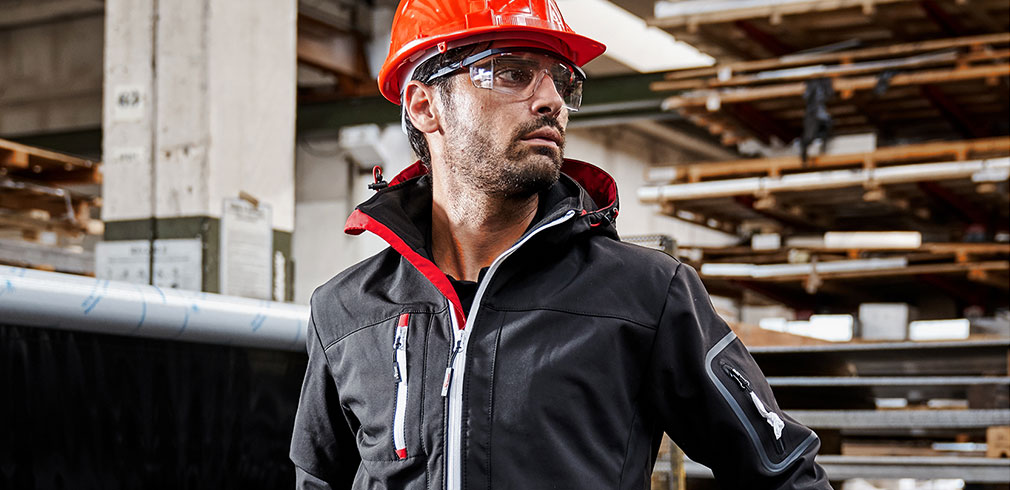
If you come to buy your workwear from U-Power you probably already know that we are a reference point for everything related to the safety of professional footwear and clothing for a great many professionals. If you are not yet one of our customers we hope to convince you to turn to us, including with this article in which we try to clarify well what the European standards are for third-category PPE, such as precisely work gloves, safety shoes, protective clothing and high-visibility clothing.
Let's examine point by point the different PPE.
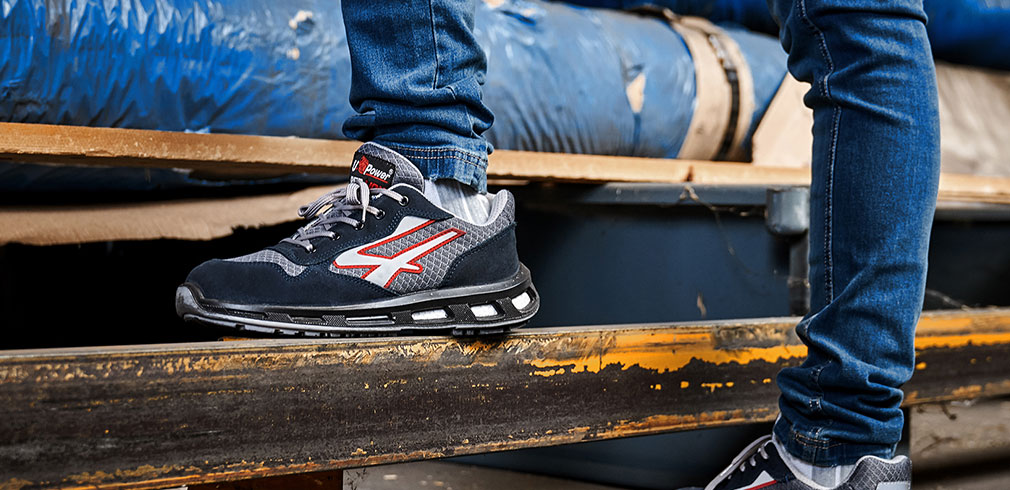
The EN ISO 20344: 2011 and EN ISO 20345:2011 standards define the codes by whichsafety shoes are identified as "safety footwear" according to the levels of protection they provide: SB, S1, S2, S3, S4 and S5. All shoes with these markings have a reinforced toecap and are slip-resistant, while only from S1 upwards are also anti-static work shoes with a hydrocarbon-resistant sole.
The higher-performance safety shoes have additional features: the S2 and S3 also resist water penetration, while the S3 and S5 also have a foil that protects against perforation of the shoe sole.
A third regulation/standard, EN ISO 20346:2011, on the other hand, defines another class of safety shoes, the "protective footwear" identified by the acronyms PB, P1, P2, P3, P4 and P5. These are basically shoes with the same characteristics said above, but with a reinforced toe that holds only lighter impacts.
Finally, EN ISO 20347:2012 then defined shoes without a reinforced toe, called "professional footwear" and identified by the codes O1, O2 and O3. In general, however, it is worth looking closely at the marking of each style to see what features the manufacturer has added to the basic ones.
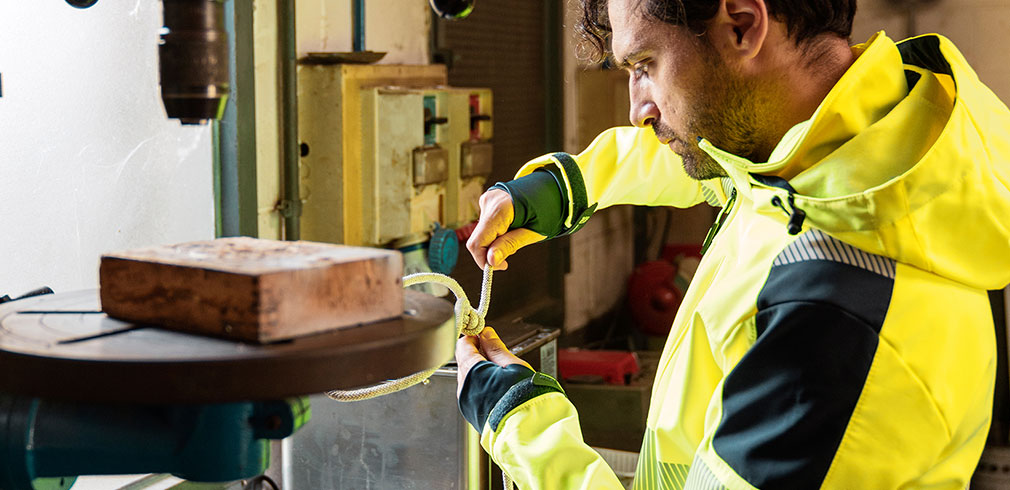
Working outdoors, especially when visibility is poor, can be a very risky business, which is why there are high-visibility work clothes that are specifically designed to provide safety in these situations, particularly when working in areas with moving machinery and vehicles.
For example, we at U-Power offer theHi Light workwear range/assortment that follows the relevant European regulation/standard, UNI EN ISO 20471:2017, which incorporates the previous BS EN ISO 20471:2013/A1:2016.
The regulation/standard specifies three classes for professional garments that can be marked as high-visibility garments, from 3 (highest visibility) to 1 (lowest visibility to be guaranteed). The elements that, according to the standard, must guarantee high visibility are two: reflective bands, which allow one to be visible at night, and yellow or orange fluorescent fabric, which instead guarantees visibility in sunlight.
High-visibility work clothes from U-Power 's Hi Light range/assortment are class 2, and according to European regulations/standards, wearing two of them (e.g., jacket and pants) is as effective as wearing one class 3 garment.
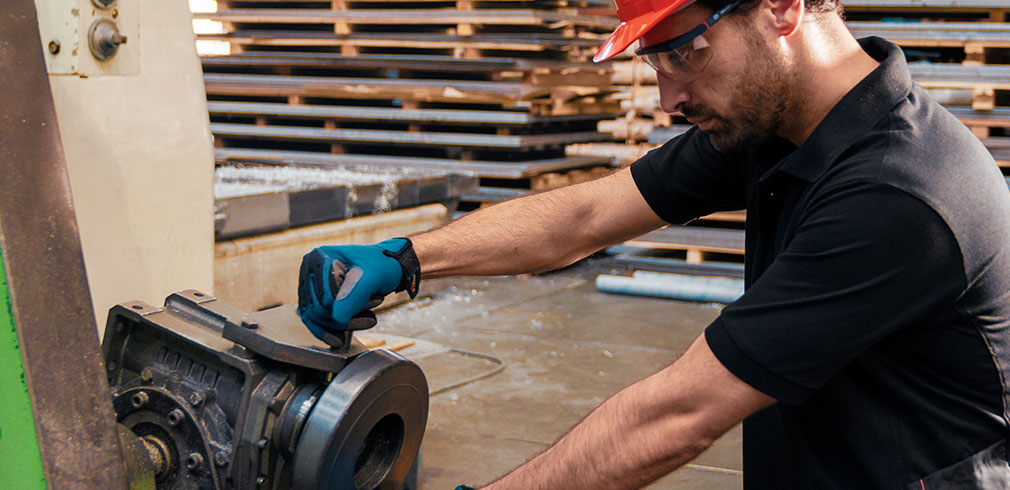
Forworkwear in general, beyond high-visibility workwear, the UNI EN ISO 13688:2013 standard applies, first of all, which gives us the general requirements that a protective garment must have. This standard stipulates that, in addition to certain minimum requirements that must always be guaranteed, other specific characteristics can be added, by reporting them on the information note that must always be kept as long as one of these PPE is used. Additional performances are identified by particular standards and their level reported on the marking.
For example, protection against rain is regulated by UNI EN 343/2008, which identifies 3 performance classes for waterproof work clothes, while protection against cold environments is the subject of UNI EN 14058:2004.
In addition, work gloves, as you know, are particularly important as a means of protection, and, in fact, there are several European regulations/standards that deal with them: EN 420 provides general protection criteria, EN 511 covers protection against cold, and EN 388 mechanical hazards.
Some of you may now be wondering: what are the right work clothes for my profession? It depends, of course, on the kind of risks you are subjected to while working, but we can tell you, with certainty, that you will find qualified advice and the best third-class PPE by turning to U-Power!
format(avif)) NewsSeptember 08, 2026
NewsSeptember 08, 2026Stronger together: U-Power acquires KÜBLER, combining their expertise for further growth in Europe
format(avif)) NewsSeptember 07, 2026
NewsSeptember 07, 2026Eugenio Cecchin is the new CEO of U-Power. Franco Uzzeni remains Chairman of the Group
format(avif))
 NewsMarch 11, 2026
NewsMarch 11, 2026U-Power presents Red Stratos with Ronaldinho: when safety becomes… Stratospheric
format(avif)) NewsJanuary 14, 2026
NewsJanuary 14, 2026U‑POWER GROUP SPA confirms the EcoVadis Gold Medal 2025 and ranks among the top 5% worldwide for ESG performance
format(avif)) NewsDecember 12, 2025
NewsDecember 12, 2025Franco Uzzeni presents the "Best Performance of the Year" award to Lautaro Martínez at the Gazzetta Sports Awards 2025
quality(80)format(avif))
quality(80)format(avif))
quality(80)format(avif))