quality(100)format(avif))
Safety shoes for work: how are they made?
Footwear from work: from conception to prototyping to dealer
format(avif))
All workers who use safety shoes are used to going to the store to look for the style of safety shoes that best suits their needs by looking at design, lightness, features, safety rating, etc.
But what lies behind a work shoe? How does the style come about? And why is one particular technology applied instead of another?
In this article we will reveal all the secrets about how work shoes are made.
Read on to learn more!
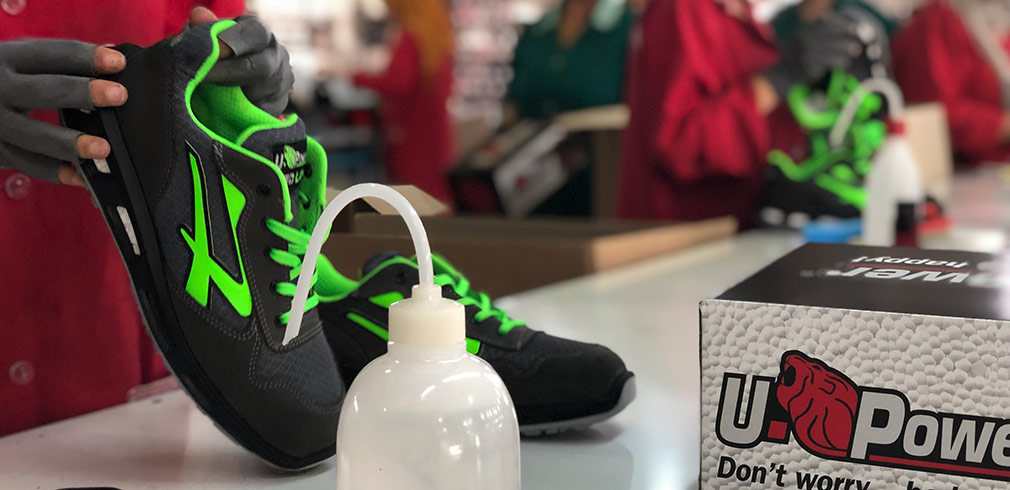
Safety shoes are not all the same, you know. It's not just a matter of safety rating, but of the advanced materials and technologies used.
Each component has a specific function but, of the same component there can be different versions. Thus, a toe cap can be made of steel, aluminum or composite and, similarly, the sole, upper and Puncture resistance system can also be set up with different features.
All safety footwear, however, follows the same process fromconception, through prototyping, testing for safety requirements to production and then to the dealer, waiting to be purchased by the consumer.
Let's see together how a work shoe is created!
Read the article to find out how a safety shoe is made.
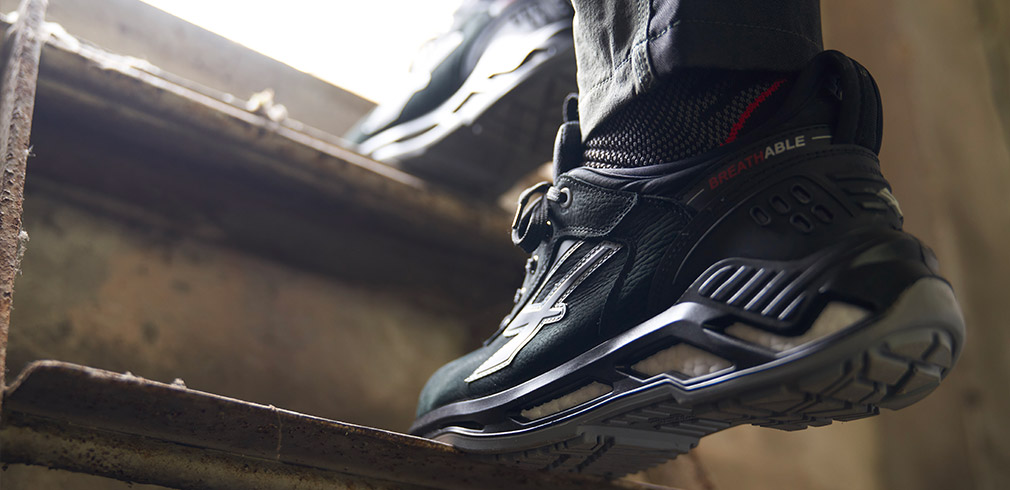
Let's start with an assumption: safety shoes are personal protective equipment regulated by ben specific regulations/standards that set out their basic requirements. These requirements are unavoidable and subject to verification tests that attest to their safety and protection.
However, beyond the essential fundamental requirements, work shoes differ from each other in terms of material characteristics, internal components, lacing system and any advanced technologies applied.
The design of safety footwear starts from a consumer need that is detected through careful market analysis and to which R&D works to find the most satisfactory and appropriate answer.
In other cases, however, the opposite happens, when, for example, new technology is designed to meet the need in a specific area but foresight leads to the realization that that technology can also be useful in other sectors. A concrete example is the Infinergy® system, which, nated for running, has literally revolutionized the world of safety footwear, guaranteeing the worker a return of more than 55 percent more energy with each step.
The adoption of the Infinergy® system in a range/assortment of safety footwear-the prime one being Red Lion-brought U-Power to a position of market leadership; a position then confirmed over time not only in Italy but throughout Europe, thanks to its constant attention to consumer needs and a timely response to worker requirements.
Therefore, when a new range/assortment of safety shoes is designed, the R&D department's goal is to provide an answer to a need. This is where innovative materials come from to make ultralight work shoes, footwear that can revitalize areas subjected to stress, or that can improve the comfort of those who work for long hours in a static position.
The response to the need is transformed from design to ideation and prototyping, until the desired result is achieved.
The prototype is tested repeatedly, until it reaches the established level of safety, comfort, and performance to move on to actual production and commercial distribution.
Let us now see, what are the components of which a work shoe is made.
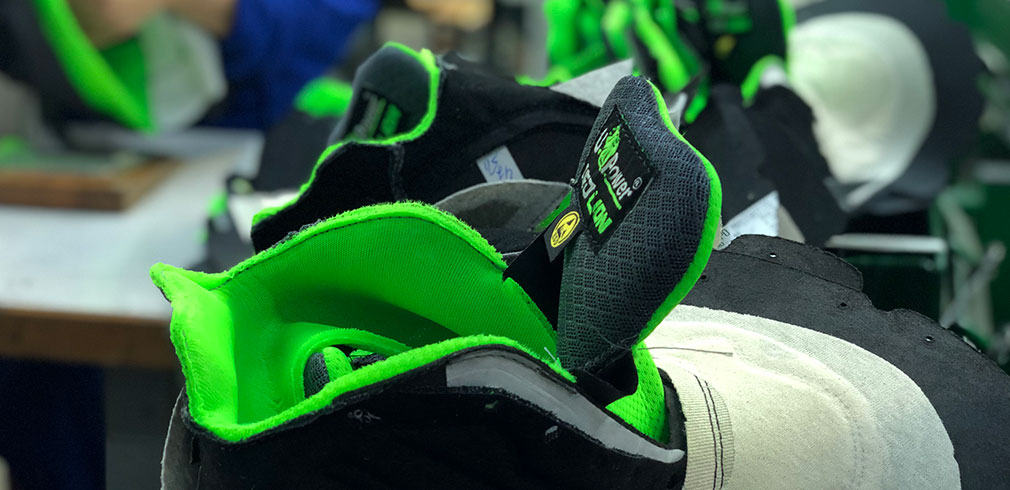
What are the essential components that differentiate everyday shoes from safety shoes?
Let's divide footwear into three essential parts: upper, lower and inside of the shoe.
WORK SHOES UPPER, CLOSURE SYSTEM AND PROTECTIONS
The upper part of the shoe consists of the upper, which can vary in material and characteristics of water proofing, lightness and breathability. The ability to resist moisture and water is one of the parameters that defines the safety rating and, therefore, is crucial for worker safety.
Materials can vary considerably, going from traditional leather (full-grain leather, Pull-up leather, etc.), Nubuck leather and suede to lighter and more breathable materials such as nylon,Airnet® - ideal in summer! - or technologically advanced materials that meet specific needs such as Putek Plus - a lightweight material with excellent water proofing benefits and highly resistant to abrasion - or GORE-TEX® known by all for its water proofing capabilities; or even recycled and environmentally sustainable fabrics such as microfiber, microfiber suede and Putek Spider Repet.
All these materials must, however, meet common criteria:
Water resistance;
Breathability;
Weight;
Strength;
Cleanliness.
Not forgetting the lacing system, which gives the worker the opportunity to choose among different opportunities, the one most congenial with respect to the working conditions (see previous article): shoes without laces, with laces, with Boa® system, quick release, with collar, etc.
SOLE, TREAD AND PROPERTIES REQUIRED OF SAFETY SHOES
The sole is one of the most important parts for worker safety because the grip ensures stability and reduces the risk of accidental fall.
In principle, it is made of compact polyurethane (PU), but it can also be made of different or additional materials, depending on the characteristics the footwear must meet. In the Red Leve line - the ultralight line of work shoes - a new generation material is used that reduces the overall weight of the footwear.
In other cases-such as, for example, for welder' s or asphalt worker 's shoes-zero-conduction nitrile rubber or Vibram is used to ensure that the foot remains at a normal temperature even when the ground heat reaches high temperatures. Or, vice versa, the sole may have a special protection (recognizable by the initials "CI") against low temperatures, ideal for all those who work in predominantly cold weather situations.
The groove also varies according to the use of the safety shoe, this is to meet the needs of use and the surfaces on which they are used: earthy or muddy, slippery, etc.
Finally, special technologies can be applied to increase grip, such as the Shield technology used in the Red 360 range/assortment, a waterproof and breathable heel that increases and improves posture stability, providing more balance.
In any case, the sole must provide anti-slip, anti-abrasion, anti-oil and anti-static properties.
TOE CAP, PUNCTURE RESISTANCE SYSTEM, LINING, INSOLE
The toe box is the part of the safety shoe that protects the front of the foot from accidentally dropping a weight and protects against the risk of injury.
The toe box is subject to strict leakage tests, but the material from which it is made can greatly change the weight of the shoe and comfort. The traditional steel toe box, for example, is heavier than an aluminum or composite toe box, however, they can withstand heavier weights than the standard safety requirements.
Obviously, if there is no real risk of falling heavy weights, a shoe with an aluminum or composite toe cap is more cost-effective-in terms of lightness and comfort. Also because composite is metal-free and therefore, does not conduct electricity or sound under metal detectors and is ideal for anyone working in security, court or airports.
Still speaking of protection, the Puncture resistance system-when provided for and required by the type of work performed-is also essential. It consists of an internal footbed, placed between the sole and the insole that prevents sharp objects such as nails or splinters from reaching the sole of the foot.
Again, the foil can be steel or textile. The steel foil, however, in addition to being metal and, therefore, a conductor and heavier, covers only 85 percent of the surface of the foot, while in the case of the Save & Flex Plus, Save & Flex Plus Green and Save & Flex Air textile footbed, protection is provided over the entire surface of the foot because it is sewn directly onto the upper.
The lining and insole are no less important for the worker because they ensure the comfort and health of the foot.
U-Power uses WingTex air tunnel lining in its work shoes, which provides high breathability thanks to its microcells that absorb and disperse moisture, while the insole varies by style to meet specific characteristics of comfort and foot health. They can be made of different materials such as leather,EVA, a soft compound, gel, recycled and environmentally sustainable materials, or have anti-fatigue properties.
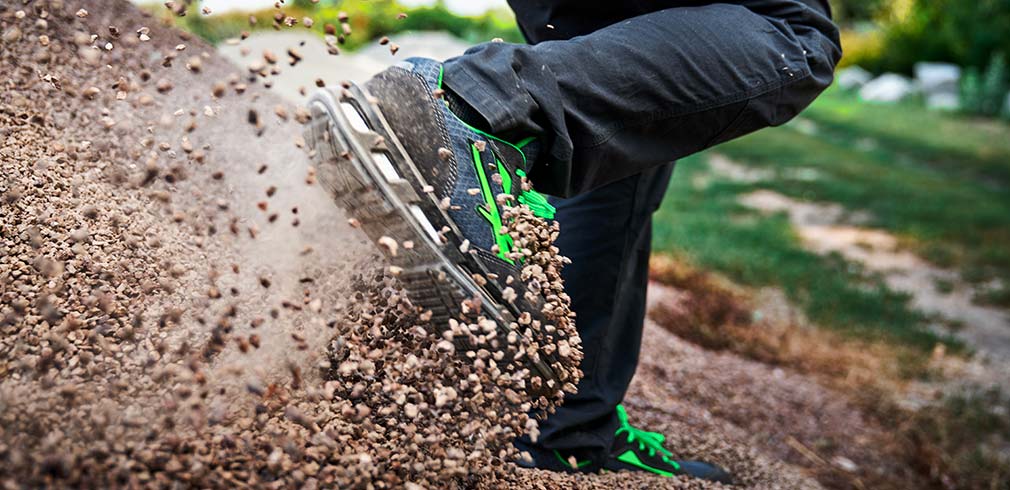
To the essential components of safety shoes can be added, then, advanced technologies that aim to improve the performance of the footwear with a view to preventing the risks of work-related musculoskeletal disorders and worker comfort.
Often, these technologies are applied with an insert, such as the Infinergy® system we have already mentioned, which ensures energy return during foot movement.
In U-Power's work shoes ranges/assortments you can find several applied technologies, including:
Able to relieve leg fatigue, lower back pain, joint pain, neck pain and reactivate blood circulation, revitalizing stressed areas.
With High Rebound technology that provides more than 40 percent energy return across the entire foot surface even in static working conditions, reducing sense of fatigue and tiredness due to posture and work performance.
But there are numerous other measures to improve worker comfort and safety:
Fast lacing systems such as Boa® Fit System;
Stressout System, the tongue designed to prevent rubbing stress at the instep;
Hypertex System fabric used for the upper that withstands ben over 950 thousand more cycles than the best fabric available on the market, providing strength, durability and extreme lightness.
In conclusion, we can say that although safety shoes must meet essential protection and safety requirements, what makes the difference between one shoe and another is the quality of the materials and technologies applied.
Safety and comfort, generate serenity during work, translating into greater concentration and general well-being.
U-Power: Quality, Technology and Innovation.
format(avif)) NewsSeptember 08, 2026
NewsSeptember 08, 2026Stronger together: U-Power acquires KÜBLER, combining their expertise for further growth in Europe
format(avif)) NewsSeptember 07, 2026
NewsSeptember 07, 2026Eugenio Cecchin is the new CEO of U-Power. Franco Uzzeni remains Chairman of the Group
format(avif))
 NewsMarch 11, 2026
NewsMarch 11, 2026U-Power presents Red Stratos with Ronaldinho: when safety becomes… Stratospheric
format(avif)) NewsJanuary 14, 2026
NewsJanuary 14, 2026U‑POWER GROUP SPA confirms the EcoVadis Gold Medal 2025 and ranks among the top 5% worldwide for ESG performance
format(avif)) NewsDecember 12, 2025
NewsDecember 12, 2025Franco Uzzeni presents the "Best Performance of the Year" award to Lautaro Martínez at the Gazzetta Sports Awards 2025
quality(80)format(avif))
quality(80)format(avif))
quality(80)format(avif))